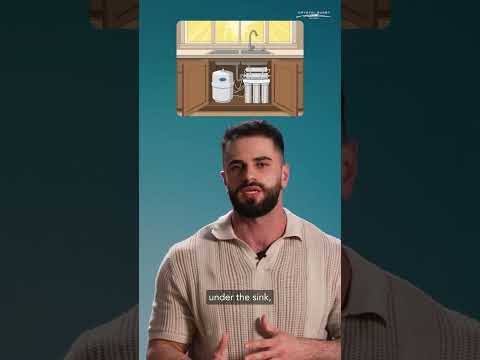
There Isn't Just ONE Type of Reverse Osmosis
There is not just one type of reverse osmosis. This short breaks down the two main RO setups you will see on the market, point-of-use and point-of-entry, plus the three membrane types that point-of-entry systems can use.
Why the Type Matters
Choosing an RO system is not one-size-fits-all. Point-of-use units handle a single tap, while point-of-entry systems treat the whole home, and for point-of-entry, the membrane type is matched to your incoming total dissolved solids (TDS). Knowing the categories up front helps you figure out which setup fits your water and your needs.
Keep Learning
Transcript
Read the video transcript
Transcript
Read the video transcript
Now that we know what reverse osmosis is, let's get into the types of systems you'll see on the market. You got two types. Your point of entry systems and your point of use systems. Point of use systems are most commonly what you're going to see.
These are small, compact, and efficient RO systems that are typically found in places like your kitchen, under the sink, on a counter. Then, you've got your point of entry systems. These are the big systems that sit at the main water line coming into your house. These filter the water for every tap, every spout, spigot in your home.
It's important to know that with these point of entry systems, you've also got three different types of membranes to pick from. One, your fresh water membrane. Two, your brackish water membrane. And three, your desal membrane.
Without going too much into detail in this video, these are generally going to be chosen based on your incoming TDS or total dissolved solids. If you guys are interested in learning more about each of these membrane types, please leave a comment. We're more than happy to put together a video so that you can figure out which membrane is best suited for you.