What Your TDS Meter Score Actually Means Tap vs RO Water
Compare tap and RO water readings while learning what a TDS meter can and cannot tell you about water.
In This Video
The clip separates a dissolved-solids measurement from a broader assessment of water quality.
Keep Learning
Transcript
Read the video transcript
Transcript
Read the video transcript
What is this little device and why do we use it to test water? This is a TDS meter and it gives you a reading of total dissolved solids in your water measured in parts per million or PPM. This can include a large variety of different substances like magnesium, calcium, or sodium. So to test our water we're going to remove the cap and turn it on. Let's start by testing our tap water.
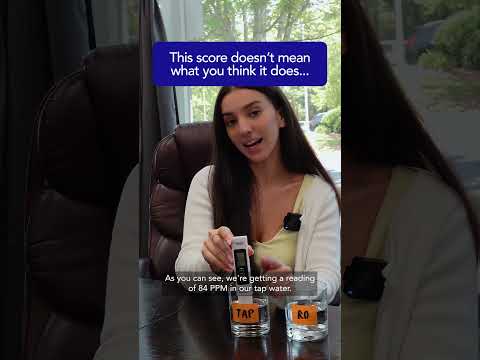
We're going to insert our TDS meter into the glass. As you can see we're getting a reading of 84 parts per million in our tap water. Now let's test our purified RO water. This is giving a reading of 7 parts per million. Even with a little bit of tap water on our TDS meter, we still got a 92% reduction in our dissolved solids.
The important thing to remember is that TDS isn't a measurement of whether the water is safe or unsafe. It simply tells us how much dissolved material is present. It's a quick and easy way to compare different water sources and see how different filtration types change the TDS. Leave a comment below with different drinks to test next.